
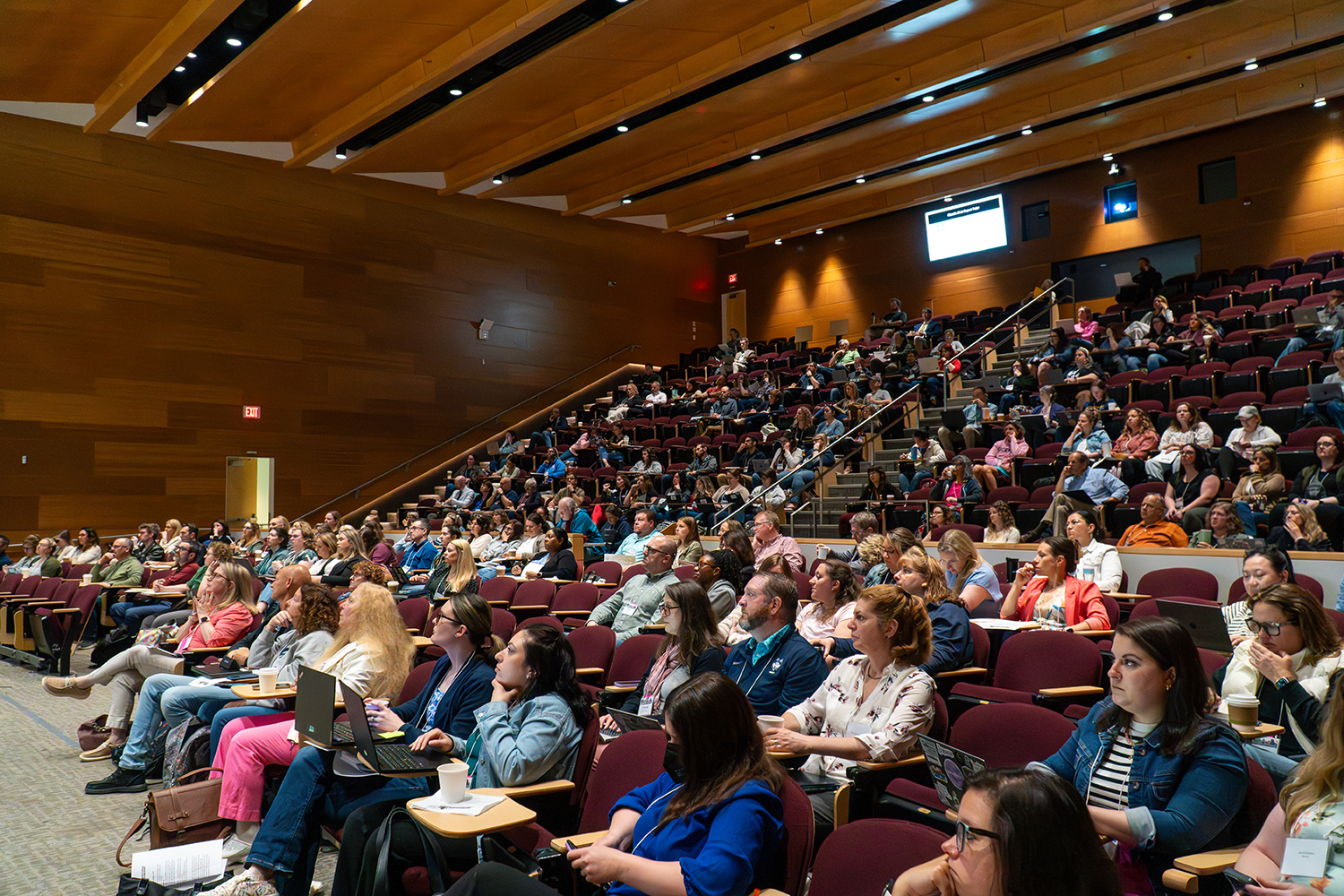
The Neag School of Education at the University of Connecticut recently convened a conference to address the burgeoning role of artificial intelligence in educational settings. The event underscored AI's transformative potential to enhance teaching by personalizing learning experiences and supporting educators in meaningful ways, while preserving the indispensable human elements of education.
AI as a Collaborative Tool
Speakers at the conference, including Timothy "TJ" Neville and Shuyu Wang, presented AI as a collaborative tool rather than a replacement for human educators. They argued that AI can automate routine administrative tasks and generate educational resources, thereby freeing teachers to concentrate on the more nuanced aspects of their profession, such as relationship-building and fostering student creativity.
"AI should be seen as a partner in progress, not a substitute for the invaluable human touch in education," said Timothy "TJ" Neville, emphasizing the importance of maintaining human-centric education.
Challenges and Ethical Considerations
Despite its potential benefits, the integration of AI in education is not without its challenges. The conference highlighted critical issues such as transparency, bias, and the risk of over-reliance on technology. These concerns underscore the necessity for robust regulatory frameworks and ethical guidelines to govern AI's use in educational contexts.
Shuyu Wang pointed out that while AI can significantly enhance educational outcomes, it is imperative to address these ethical concerns head-on to prevent unintended consequences. "Without clear guidelines, we risk perpetuating existing biases and creating new forms of inequality," she noted.
Balancing Innovation and Integrity
The discussions at the conference reflected a broader societal debate on balancing technological innovation with educational integrity. As AI continues to permeate classrooms, educators and policymakers must work collaboratively to ensure that technological advancements do not compromise the fundamental values of education.
In conclusion, while AI holds promise for revolutionizing the educational landscape, it must be harnessed thoughtfully and ethically. The Neag School of Education's conference serves as a timely reminder of the need for careful consideration and strategic planning in integrating AI into K-12 education.
Originally published at https://today.uconn.edu/2025/07/ai-in-k-12-education-partners-in-progress-not-replacements/
ResearchWize Editorial Insight
The article highlights a pivotal shift in K-12 education, emphasizing AI's role as a supportive tool rather than a replacement for educators. This matters for students and researchers as it frames AI as a means to enhance educational quality by automating mundane tasks, allowing teachers to focus on creativity and personal interaction. The potential for AI to transform learning experiences is immense, but it also brings challenges, such as bias and over-reliance on technology.
For researchers, the discussion around ethical considerations and the need for regulatory frameworks offers a fertile ground for further study. How can AI be integrated without exacerbating existing inequalities? What frameworks are necessary to ensure AI's ethical use in education? These questions are crucial as AI's role in education expands.
Students, on the other hand, stand to benefit from more personalized learning experiences. However, they must also be aware of the implications of AI in their education, such as data privacy and the potential for bias. The article underscores the importance of balancing technological advancements with educational integrity, a critical consideration for both current and future educational landscapes.
Looking Ahead
1. Curriculum Overhaul: An Urgent Need
The current educational framework is woefully outdated in addressing the nuances of AI. We need a curriculum overhaul that integrates AI literacy from the ground up. This isn't just about coding; it's about understanding algorithms, ethics, and the societal implications of AI. Will schools adapt fast enough, or will they leave students unprepared for a tech-driven future?
2. Teacher Training: A Non-Negotiable Priority
Teachers are the linchpins of this transformation. Yet, how many are equipped to incorporate AI tools effectively? Professional development programs must evolve, focusing on AI integration and ethical considerations. What happens if educators are left behind in the AI race? Their inability to guide students could widen educational disparities.
3. Regulatory Vigilance: A Call to Action
As AI becomes entrenched in educational systems, regulatory oversight is crucial. The risk of data misuse, privacy breaches, and algorithmic bias looms large. Are regulators ready to tackle these challenges, or will they falter, allowing tech giants to set the rules? A proactive regulatory framework is not just desirable; it's imperative.
4. Ethical Frameworks: Building Guardrails
The ethical dimensions of AI in education cannot be overstated. We must establish guardrails to prevent AI from perpetuating biases or marginalizing vulnerable groups. Who decides these ethical guidelines, and how do we ensure they are followed? The stakes are too high for complacency.
5. Collaborative Ecosystems: Bridging Sectors
6. Student Empowerment: Beyond Passive Learning
AI should empower students, transforming them from passive consumers to active creators. We need platforms that encourage critical thinking and innovation. Are educational technologies fostering this shift, or merely automating rote learning? The future demands a student-centric approach, nurturing curiosity and resilience.
In summary, the evolution of AI education is fraught with challenges and opportunities. The path forward requires bold action, informed policy, and ethical foresight. Will we rise to the occasion, or will we let these pivotal moments slip through our fingers? The decisions we make today will shape the educational landscape for generations to come.
Originally reported by https://today.uconn.edu/2025/07/ai-in-k-12-education-partners-in-progress-not-replacements/.
Related Articles
- California State University Bets $17 Million on ChatGPT for All Students and Faculty
- Silvestro advances research of supportive AI use in educational settings
- I’m a High Schooler. AI Is Demolishing My Education.
📌 Take the Next Step with ResearchWize
Want to supercharge your studying with AI? Install the ResearchWize browser extension today and unlock powerful tools for summaries, citations, and research organization.
Not sure yet? Learn more about how ResearchWize helps students succeed.