
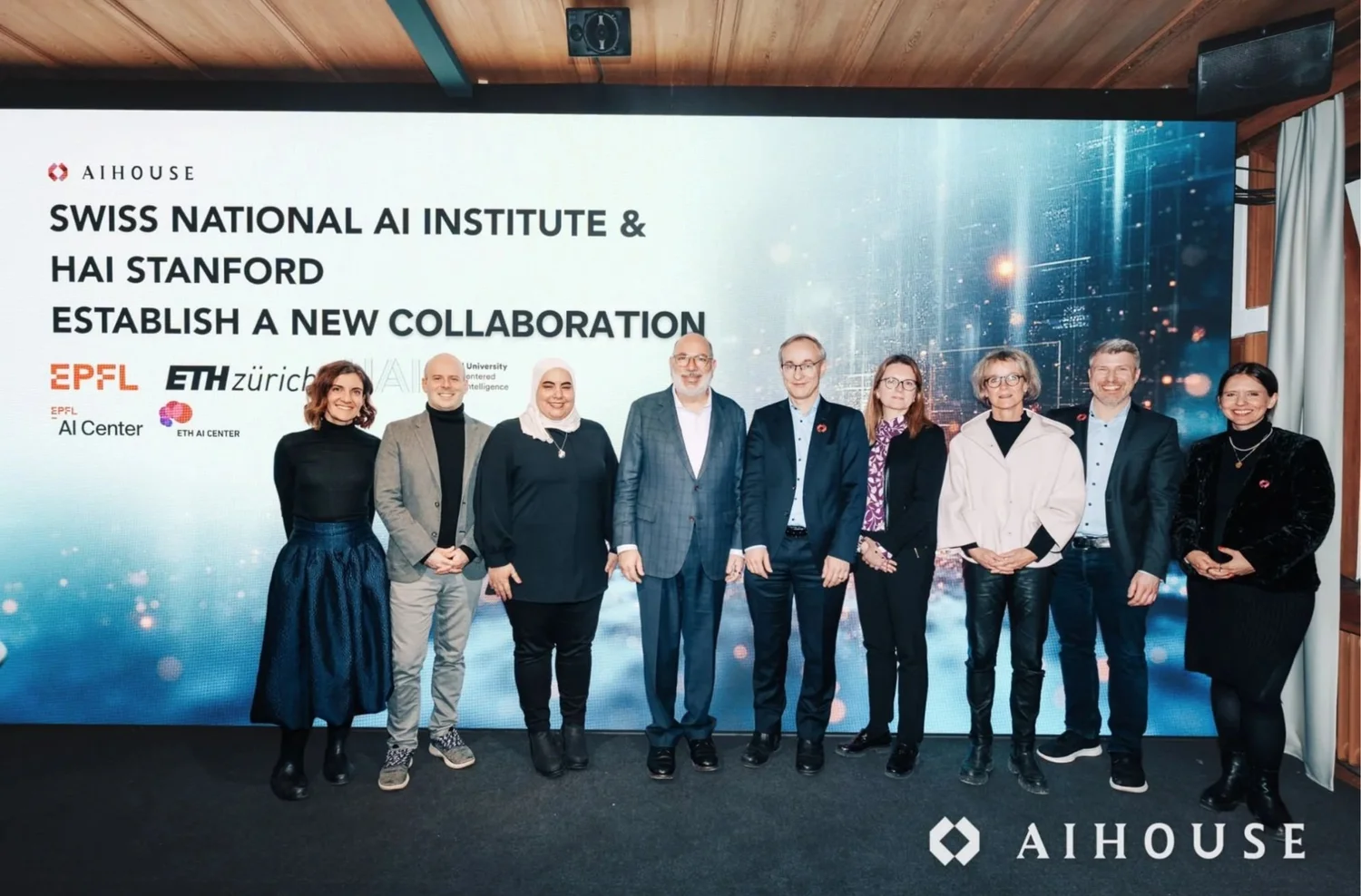
In a significant move to shape the future of artificial intelligence, ETH Zurich, EPFL, and the Stanford Institute for Human-Centered Artificial Intelligence (HAI) have announced a strategic collaboration. This partnership is poised to advance AI research and education with a focus on open, large-scale foundation models, while addressing their societal implications.
Fostering Academic Leadership in AI
The collaboration aims to reinforce academic leadership in the AI domain, emphasizing the importance of human-centered approaches and responsible deployment. As the field of AI continues to evolve at an unprecedented pace, this partnership seeks to counterbalance the growing influence of commercially driven AI development, which often prioritizes profitability over ethical considerations.
The alliance between these prestigious institutions is expected to catalyze innovative research and foster a new generation of AI experts who are well-versed in both technological advancements and ethical responsibilities. By focusing on open and transparent AI models, the partnership underscores the importance of accessibility and inclusivity in AI research.
Emphasizing Societal Impact
The societal impact of AI is a central theme of this collaboration. With AI technologies increasingly permeating various aspects of everyday life, the need for frameworks that ensure ethical and responsible use becomes paramount. The partnership will explore the implications of AI on society, aiming to develop guidelines and policies that safeguard public interest and promote equitable outcomes.
“Our collaboration with ETH Zurich and EPFL marks a pivotal step in advancing AI that truly benefits society. By prioritizing human-centered approaches, we aim to set a benchmark for ethical AI development,” said John Etchemendy, co-director of Stanford HAI.
Countering Commercial Influence
In an era where AI development is often dominated by commercial interests, this partnership represents a critical shift towards prioritizing research that serves the public good. By focusing on open-source models and transparent methodologies, ETH Zurich, EPFL, and Stanford HAI are taking a stand against the proprietary practices that can limit innovation and accessibility.
This initiative highlights the urgent need for academic institutions to lead the charge in developing AI technologies that are not only cutting-edge but also aligned with societal values and ethical norms. As AI continues to transform industries and economies, the role of academia in guiding its trajectory becomes increasingly vital.
Originally published at https://www.edtechinnovationhub.com/news/eth-zurich-epfl-and-stanford-hai-formalize-human-centered-ai-partnership
ResearchWize Editorial Insight
The collaboration between ETH Zurich, EPFL, and Stanford HAI is a pivotal development for students and researchers in AI. This partnership emphasizes the importance of human-centered AI, a crucial counterbalance to the profit-driven focus of many commercial AI developments. By prioritizing ethical and responsible AI, this alliance sets a new standard for academic leadership in the field.
For students, this partnership offers a unique opportunity to engage with cutting-edge research that aligns with societal values. It underscores the importance of developing AI expertise that is not only technically proficient but also ethically aware. This focus on open, transparent models promotes inclusivity and accessibility, key factors for fostering innovation.
Researchers stand to benefit from the collaborative environment that this partnership promises. By exploring the societal implications of AI, the alliance aims to create frameworks and policies that ensure AI technologies serve the public interest. This is crucial as AI continues to permeate various sectors, raising questions about its long-term societal impact.
This initiative also highlights the role of academia in steering AI development away from commercial dominance. It raises critical questions: How can academic institutions maintain their influence in AI research? What are the long-term effects of prioritizing human-centered approaches? As AI reshapes industries, the guidance of academic institutions becomes indispensable in ensuring ethical and equitable outcomes.
Looking Ahead
1. Seize the Curriculum Revolution AI education must pivot from a tech-centric curriculum to a holistic one that integrates ethics, societal impact, and interdisciplinary studies. Are our current educational frameworks nimble enough to incorporate these shifts? We need courses that not only teach AI development but also its implications on privacy, employment, and human rights.
2. Bridge Academia and Industry The gap between academia and industry is a chasm. We must build robust pipelines for collaboration that allow academic insights to inform industry practices and vice versa. If educators and industry leaders don't synchronize, will we continue to churn out graduates unprepared for real-world challenges?
3. Mandatory Ethics Training Every AI program should mandate ethics training. It’s not just about understanding AI's capabilities but grappling with its moral dimensions. How can we ensure that tomorrow's AI leaders prioritize ethical considerations over technological prowess?
4. Global Policy Initiatives AI education must be at the forefront of global policy discussions. This means developing international standards for AI use and education. What happens if we leave policy-making to lag behind technological advancements? The risk of uneven regulation could lead to a global patchwork of standards, hindering innovation and cooperation.
5. Adapt or Fall Behind Rapid curriculum adaptation is non-negotiable. AI evolves daily, and so should educational content. Institutions must adopt agile methodologies, allowing for continuous course updates. Will traditional academic bureaucracies rise to the challenge, or will they become relics in an AI-driven future?
6. Inclusivity as a Priority AI education should be accessible to diverse populations, ensuring that varied perspectives inform AI's development and deployment. How do we create inclusive educational ecosystems that welcome underrepresented groups into the AI fold?
7. Invest in Lifelong Learning AI isn’t a one-time study. Professionals need ongoing education to stay relevant. Institutions should offer lifelong learning opportunities, helping individuals continuously update their skills. If we fail to invest in this, will we witness a widening skills gap?
In conclusion, the future of AI education hinges on our ability to adapt, integrate, and innovate. It’s time to overhaul outdated systems and prepare a workforce ready to wield AI responsibly and effectively. The question is, are we ready to take these bold steps, or will we watch as opportunities slip through our fingers?
Originally reported by https://www.edtechinnovationhub.com/news/eth-zurich-epfl-and-stanford-hai-formalize-human-centered-ai-partnership.
Related Articles
- Argonne expands nation’s AI infrastructure with powerful new supercomputers and public-private partnerships
- Top 25 Applications of AI: Transforming Industries Today
- Thompson Morrison offers guidance on practical and powerful AI use in schools.
📌 Take the Next Step with ResearchWize
Want to supercharge your studying with AI? Install the ResearchWize browser extension today and unlock powerful tools for summaries, citations, and research organization.
Not sure yet? Learn more about how ResearchWize helps students succeed.