
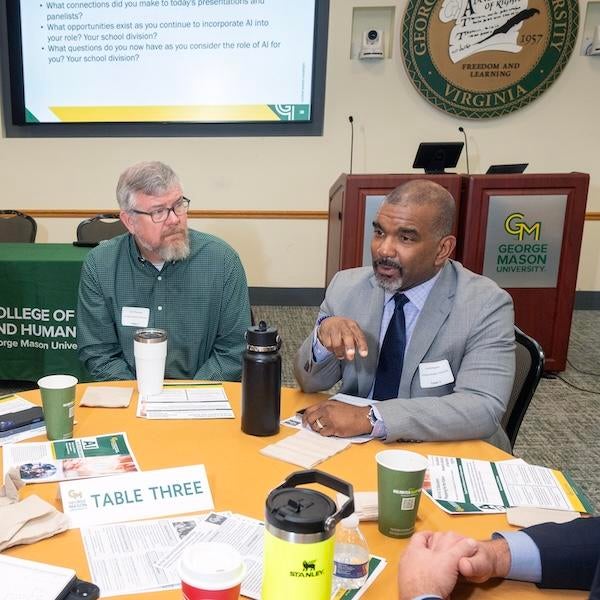
In an era where artificial intelligence is rapidly reshaping various sectors, George Mason University’s College of Education and Human Development is taking a proactive stance in ensuring that AI is integrated into the educational landscape both responsibly and effectively. Through the Educational Research Alliance of Northern Virginia, the university is spearheading initiatives that emphasize ethical design, privacy, and comprehensive teacher preparation.
Ethical Design and Privacy at the Forefront
The integration of AI into education brings with it a host of ethical considerations. George Mason University is placing a significant emphasis on these ethical dimensions, ensuring that AI tools are designed with privacy and security as fundamental priorities. This approach aims to protect students and educators from potential data breaches and misuse of personal information, which are critical concerns in today’s digital age.
Preparing Educators for the Future
Recognizing the pivotal role educators play in the successful implementation of AI in classrooms, the initiative focuses heavily on teacher preparation. By equipping educators with the necessary skills and knowledge, the university aims to foster an environment where AI can be used to enhance learning outcomes rather than hinder them. This preparation is crucial as teachers navigate the complexities of integrating new technologies into their teaching methodologies.
Involving Students in Policy Discussions
A distinctive feature of George Mason University's approach is the involvement of students in policy discussions related to AI in education. This inclusion ensures that the voices of those directly impacted by these technologies are heard and considered. By engaging students in these conversations, the university is fostering a sense of responsibility and awareness among future generations regarding the safe and appropriate use of AI tools in educational settings.
"Our goal is to prepare both educators and students to navigate the complexities of AI in education, ensuring that these tools are used ethically and effectively," said a spokesperson for the Educational Research Alliance of Northern Virginia.
This initiative by George Mason University sets a precedent for other educational institutions to follow, highlighting the importance of a comprehensive and ethically-driven approach to AI integration in education. As AI continues to evolve, it is imperative that educational policies keep pace with technological advancements to mitigate risks and maximize benefits.
Originally published at https://www.gmu.edu/news/2026-01/george-masons-college-education-and-human-development-advancing-responsible-ai
ResearchWize Editorial Insight
George Mason University is setting a benchmark in the integration of AI into education. This matters for students and researchers because it emphasizes ethical design and privacy, crucial in an era of rampant data breaches. By focusing on these aspects, the university aims to protect personal information, a pressing concern in digital education.
The initiative's emphasis on teacher preparation is significant. Educators are key to successfully implementing AI in classrooms. Without proper training, AI could hinder rather than help learning outcomes. This approach ensures that AI serves as a tool for enhancement, not a barrier.
Involving students in policy discussions is a game-changer. It empowers those directly affected by AI technologies and cultivates a sense of responsibility. This engagement is vital as it prepares future generations to handle AI tools wisely.
This initiative raises important questions: Are other educational institutions ready to follow suit? How will these efforts shape the future of AI in education? The long-term effects could redefine educational policies and practices, making this a crucial area for ongoing research and observation.
Looking Ahead
1. Curriculum Overhaul: - Are our current educational frameworks agile enough to incorporate AI advancements? Traditional curriculums are outdated relics in a world where AI evolves at breakneck speeds. Education systems must pivot towards a dynamic curriculum that integrates AI literacy as a core component. This means not just teaching coding, but instilling a deep understanding of AI ethics, data privacy, and algorithmic bias. Will the curriculum adapt fast enough to prepare students for AI-driven careers?
2. Teacher Training Revolution: - Educators are the linchpins of AI integration. But are they equipped for this seismic shift? Continuous professional development programs must be established, focusing on empowering teachers with AI tools and methodologies. This isn’t about replacing educators with technology but augmenting their capabilities to foster more personalized and effective learning experiences. Will policymakers prioritize funding for such initiatives?
3. Regulatory Frameworks: - As AI becomes embedded in educational infrastructures, what happens if regulators fall behind? It's imperative that regulatory bodies keep pace with AI innovations to safeguard against potential abuses. This includes setting stringent guidelines for data usage, ensuring transparency in AI algorithms, and establishing accountability mechanisms. Without robust regulations, the risk of misusing AI in education looms large.
4. Student-Centric Policies: - Students aren’t just passive recipients of AI; they are stakeholders. Institutions must involve students in policy-making processes, giving them a platform to voice concerns and contribute to shaping the AI tools that affect their learning environments. Are we ready to democratize policy discussions in education to include student perspectives?
5. Cross-Sector Collaboration: - The future of AI in education isn’t confined to the ivory towers of academia. It requires an ecosystem approach, bringing together tech companies, educators, policymakers, and students to co-create solutions. Collaborative efforts can drive innovation, address ethical concerns, and ensure that AI tools are accessible and equitable. Will education leaders forge these necessary alliances?
The path forward is fraught with challenges, but the potential rewards are transformative. As we stand on the brink of an AI-driven educational revolution, the decisions we make today will shape the future of learning for generations to come. Are we ready to seize the opportunity?
Originally reported by https://www.gmu.edu/news/2026-01/george-masons-college-education-and-human-development-advancing-responsible-ai.
Related Articles
- Top AI recruiting tools and software of 2026
- AI could transform research assessment — and some academics are worried
- When two years of academic work vanished with a single click
📌 Take the Next Step with ResearchWize
Want to supercharge your studying with AI? Install the ResearchWize browser extension today and unlock powerful tools for summaries, citations, and research organization.
Not sure yet? Learn more about how ResearchWize helps students succeed.