
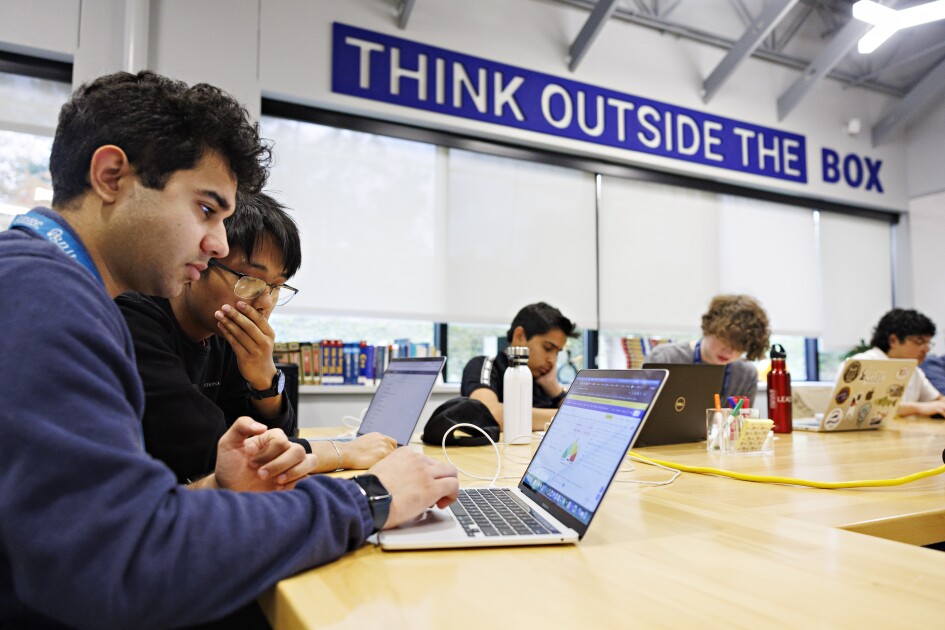
Imagine a world where students in career and technical education (CTE) programs are equipped with cutting-edge tools that not only enhance their learning but also prepare them for the future of work. This is becoming a reality as artificial intelligence (AI) makes its mark on fields like agriculture, cooking, and cybersecurity. With AI, students are not just learning; they are innovating, problem-solving, and creating new opportunities.
Empowering Students with AI
AI is opening doors for students by providing them with the tools they need to tackle real-world challenges. In agriculture, for instance, AI can help students analyze data to improve crop yields, while in cooking, AI-driven applications can assist in creating new recipes or optimizing kitchen operations. In cybersecurity, AI is crucial for developing strategies to protect against ever-evolving threats.
Michael Connet from the Association for Career and Technical Education shares his insights on this trend. He notes,
"There's a growing interest in integrating AI into CTE programs because it not only enhances the learning experience but also equips students with critical thinking skills needed in today's job market."Connet emphasizes the importance of blending AI applications with critical thinking, ensuring that students are not just passive users of technology but active problem solvers.
Addressing Challenges
While the integration of AI in CTE is promising, it does come with its set of challenges. Privacy concerns and the accuracy of information are at the forefront of these challenges. Educators and policymakers are tasked with ensuring that AI tools are used responsibly and ethically, safeguarding student data and maintaining the integrity of the information provided by AI systems.
Despite these challenges, the potential benefits of AI in CTE are immense. By fostering an environment where students can engage with AI technologies, educators are preparing them for a future where AI will be an integral part of many careers. This preparation is not just about learning to use AI but understanding its implications and applications in various fields.
The Future of CTE with AI
As AI continues to evolve, so too will its role in career and technical education. The future holds exciting possibilities for students who are ready to embrace these technologies and use them to drive innovation in their chosen fields. With the right guidance and resources, today's CTE students are poised to become tomorrow's leaders in a world increasingly shaped by AI.
Originally published at https://www.edweek.org/technology/how-ai-is-changing-career-and-technical-education/2025/11
ResearchWize Editorial Insight
The article "AI's Transformative Role in Career and Technical Education" is a beacon for both students and researchers, highlighting the evolving landscape of education as it intertwines with technology. For students, particularly those in Career and Technical Education (CTE) programs, the integration of AI represents a shift from traditional learning methods to an immersive, hands-on approach that mirrors real-world applications. This is crucial because it not only enhances their educational experience but also equips them with the skills necessary to thrive in a rapidly changing job market.
For teachers, this article underscores the importance of adapting to new teaching methodologies that incorporate AI. It invites educators to become facilitators of innovation, guiding students to not just use AI tools, but to critically engage with them. This approach fosters a classroom environment where students are encouraged to think creatively and solve problems, preparing them for future careers where such skills are invaluable.
In terms of inclusion, AI in CTE can level the playing field by providing all students, regardless of their background, access to advanced tools and learning opportunities. However, it also raises important considerations about equity and access, ensuring that all students can benefit from these technologies without exacerbating existing disparities.
For researchers, the article opens up a myriad of possibilities for exploring how AI can be effectively integrated into educational settings, the impact it has on learning outcomes, and the ethical considerations that accompany its use. It encourages a dialogue about the balance between technological advancement and the human elements of teaching and learning.
In essence, this article is a call to action for educators and researchers alike to embrace the potential of AI in education while remaining mindful of the challenges and responsibilities it brings. It’s about preparing students not just for the jobs of tomorrow, but for a future where they can lead with innovation and integrity.
Looking Ahead
In this nurturing environment, collaborative learning becomes a central pillar. Students can work in teams, using AI to simulate real-world scenarios and solve complex problems together. This not only builds technical skills but also fosters communication and teamwork, essential for any career path. Imagine a group of students in a virtual kitchen, experimenting with AI to create a new dish, or a team in a digital farm, using AI to predict weather patterns and optimize planting schedules.
Inclusion is another vital aspect of this future. AI has the potential to level the playing field by providing access to resources and learning opportunities tailored to individual needs. This means students from diverse backgrounds and abilities can participate fully, bringing their unique perspectives and talents to the table. Educators play a crucial role here, guiding students to use AI responsibly and ethically, ensuring no one is left behind in this technological journey.
The emotional side of schooling is equally important. As AI takes on more routine tasks, educators can focus on nurturing students' emotional intelligence and well-being. They can spend more time understanding students' aspirations and fears, providing support and encouragement. This human touch is irreplaceable and vital for building a supportive learning community.
As we plant the seeds of AI education today, we must tend to this garden with care and foresight. By doing so, we cultivate not just skilled workers, but thoughtful, empathetic individuals ready to lead in a world where technology and humanity coexist harmoniously.
Originally reported by https://www.edweek.org/technology/how-ai-is-changing-career-and-technical-education/2025/11.
Related Articles
- Students express hope — and fear — over classroom AI use
- Academic Libraries Embrace AI
- AI to accelerate national renewal and growth as Google DeepMind backs UK tech and science sectors
📌 Take the Next Step with ResearchWize
Want to supercharge your studying with AI? Install the ResearchWize browser extension today and unlock powerful tools for summaries, citations, and research organization.
Not sure yet? Learn more about how ResearchWize helps students succeed.