
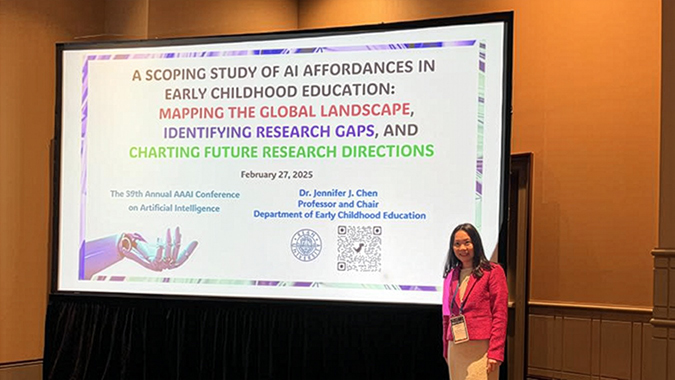
In an era where artificial intelligence is rapidly permeating various sectors, its integration into early childhood education is a subject of both intrigue and caution. Spearheading this exploration is Professor Jennifer Chen from Kean University, who is conducting pivotal research on the impact of AI on children aged 3 to 8. Her work is a clarion call for a balanced approach that embraces technological advancements while safeguarding the rights and privacy of young learners.
Benefits of AI in Early Learning
AI's potential to transform educational experiences for young children is significant. Professor Chen's research underscores the promise of AI-driven personalized learning, particularly for bilingual students. By tailoring educational content to individual learning paces and styles, AI can enhance comprehension and engagement. Such innovations could bridge learning gaps and foster a more inclusive educational environment.
Ethical and Privacy Concerns
Despite the potential benefits, the integration of AI in early childhood education is fraught with challenges. Chief among these is the protection of children's data. Professor Chen advocates for stringent data protection measures and transparency from AI companies regarding data usage. The ethical implications of data collection on vulnerable populations like children cannot be overstated.
"AI companies must be transparent about how they use data. It's crucial to establish trust and protect the privacy of our youngest learners," said Professor Jennifer Chen.
The Need for Responsible AI Integration
As AI technologies continue to evolve, the call for responsible integration into educational frameworks grows louder. Policymakers and educators are urged to develop comprehensive guidelines that address both the opportunities and risks associated with AI in classrooms. Without such measures, educational institutions may face significant ethical and legal challenges.
Professor Chen's research is a timely reminder of the dual nature of technological progress. While AI offers unprecedented opportunities to enhance learning, it also necessitates a vigilant approach to ensure ethical standards are upheld. The future of AI in education hinges on our ability to navigate these complexities with foresight and responsibility.
Originally published at https://njbia.org/kean-professor-leads-research-on-role-of-ai-in-early-childhood-education/
ResearchWize Editorial Insight
This article is crucial for students and researchers as it delves into the dual-edged sword of AI in early childhood education. On one hand, AI promises personalized learning experiences, potentially revolutionizing how young children, especially bilingual ones, engage with educational content. This could reshape educational inclusivity and effectiveness.
However, the article raises significant ethical and privacy concerns. The collection and use of children's data by AI systems pose risks that demand rigorous scrutiny. Professor Chen's call for transparency and stringent data protection measures highlights the need for robust ethical frameworks.
For researchers, this underscores the importance of interdisciplinary studies combining technology, ethics, and education policy. Students can explore how AI can be responsibly harnessed to benefit society while safeguarding individual rights.
The big-picture question: Can educational institutions and policymakers develop frameworks that balance innovation with ethical responsibility? The long-term impact of AI in education hinges on addressing these systemic risks.
Looking Ahead
1. Curriculum Overhaul Required: The rapid evolution of AI in education demands a complete rethinking of our current curriculum. Are our educational systems ready to pivot? Integrating AI effectively means designing courses where AI literacy is as fundamental as reading and arithmetic. Yet, are our teachers equipped with the necessary skills? Professional development programs must be implemented now to ensure educators are not just consumers of AI tools but informed guides in their responsible use.
2. Regulation or Chaos? What happens if regulators fall behind? The absence of robust regulatory frameworks could lead to an educational landscape dominated by tech giants with little regard for ethical standards. It's imperative that policymakers act swiftly to establish clear guidelines that protect children's rights and privacy. Without these, we risk exposing young learners to unchecked data mining and manipulation.
3. Ethics Front and Center: As AI becomes woven into the fabric of early education, we must confront its ethical dimensions head-on. Who will hold AI developers accountable for biases encoded into their algorithms? Transparent AI systems are not just desirable; they're essential. Educators and parents alike must demand clarity on how AI systems make decisions that affect young minds.
4. Data Sovereignty for the Youngest: The current discourse on data privacy often overlooks the unique vulnerabilities of children. Shouldn't children's data be treated with the highest level of scrutiny and protection? As AI tools gather more data than ever from early learners, the call for stringent data sovereignty measures grows urgent. It's time to prioritize a child's right to digital privacy over commercial interests.
5. A Collaborative Ecosystem: The future of AI in education isn't a solo endeavor. It requires a collaborative ecosystem involving educators, technologists, parents, and policymakers. Are we ready to break down silos and embrace interdisciplinary partnerships? By fostering an environment where diverse stakeholders contribute, we can ensure AI tools are not only innovative but also ethically sound and educationally beneficial.
In conclusion, the integration of AI into early childhood education is inevitable, but its success hinges on our proactive measures today. Will we rise to the occasion, or will we let inertia dictate the future of education? The choice is ours, and the clock is ticking.
Originally reported by https://njbia.org/kean-professor-leads-research-on-role-of-ai-in-early-childhood-education/.
Related Articles
- UNO Business Students Use AI to Hone Strategic Decision-Making
- Collaborations key to unlocking the potential of AI in transforming medical education: Duke-NUS study
- Helping K-12 schools navigate the complex world of AI
📌 Take the Next Step with ResearchWize
Want to supercharge your studying with AI? Install the ResearchWize browser extension today and unlock powerful tools for summaries, citations, and research organization.
Not sure yet? Learn more about how ResearchWize helps students succeed.