
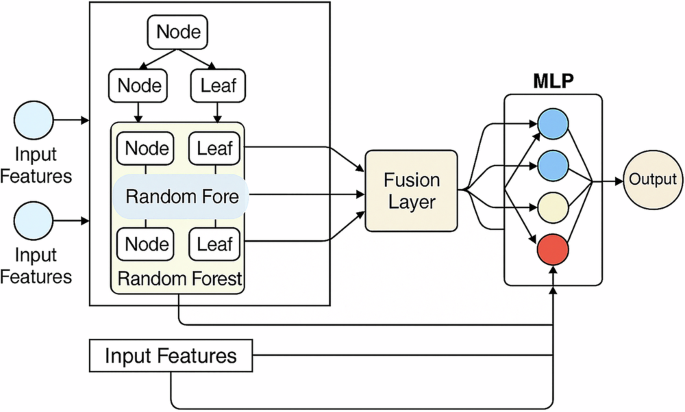
In an era where artificial intelligence is increasingly permeating educational landscapes, CognifyNet emerges as a groundbreaking model poised to redefine how educational data is analyzed and utilized. Developed through a combination of ensemble learning and deep neural networks, CognifyNet offers a sophisticated approach to personalized learning by meticulously analyzing student behaviors, cognitive patterns, and engagement levels.
Outperforming Traditional Models
Unlike its predecessors, such as random forest and multi-layer perceptron models, CognifyNet demonstrates a marked improvement in predictive accuracy. It achieves significant reductions in both mean squared error and mean absolute error, metrics critical for evaluating the performance of predictive models. These advancements suggest a promising trajectory for AI-driven educational tools in enhancing learning outcomes.
Focus on Equity and Privacy
One of the most pressing concerns in the deployment of AI in education is the potential for bias and privacy violations. CognifyNet addresses these issues head-on by incorporating bias mitigation strategies and robust privacy safeguards. This ensures that the analytics provided are equitable across diverse student populations, a crucial aspect in maintaining fairness and inclusivity in educational settings.
"CognifyNet not only sets a new standard for predictive accuracy but also prioritizes ethical considerations, which are often overlooked in AI implementations," said Dr. Emily Harper, a leading expert in educational technology.
Implications for Educational Policy
The introduction of CognifyNet raises significant implications for educational policy and regulatory frameworks. As institutions increasingly rely on AI for educational analytics, there is a pressing need for comprehensive guidelines to govern its use. Without clear policies, schools and universities may encounter unforeseen liabilities related to data privacy and algorithmic bias.
Furthermore, the deployment of such advanced technologies necessitates a reevaluation of existing educational practices and curricula. Educators and policymakers must collaborate to ensure that AI tools like CognifyNet are integrated in ways that enhance learning while safeguarding student rights and privacy.
Originally published at https://www.nature.com/articles/s41599-025-05187-y
ResearchWize Editorial Insight
CognifyNet's emergence in educational analytics is a pivotal development for students and researchers. It promises a leap in predictive accuracy, potentially transforming personalized learning. But the real story lies in its focus on equity and privacy—two areas where AI often falters. By addressing bias and privacy concerns, CognifyNet could set a new benchmark for ethical AI in education.
Yet, this innovation raises critical questions. How will educational institutions adapt to such advanced analytics? Are current policies robust enough to handle the complexities of AI-driven tools? Without stringent guidelines, schools risk privacy breaches and biased outcomes, undermining the very fairness CognifyNet aims to promote.
For researchers, the model's blend of ensemble learning and deep neural networks offers fertile ground for study. How can these technologies be further refined to enhance educational outcomes? And what are the long-term implications for data-driven education?
CognifyNet isn't just another AI tool; it's a catalyst for broader discussions on the role of technology in education. As it sets new standards, the challenge will be ensuring those standards are met without compromising student rights or educational integrity.
Looking Ahead
1. Curriculum Overhaul or Stagnation?
As AI like CognifyNet redefines educational analytics, the curriculum must evolve. But will it? Current educational systems are notorious for their inertia. If AI-driven insights are to translate into real-world learning enhancements, educators need to act fast. Schools must integrate AI literacy into their syllabi, preparing students not just to use AI tools, but to understand and challenge them. Without this shift, we risk a generation of students proficient in technology but devoid of critical thinking skills.
2. Regulatory Catch-Up: A Race Against Time
What happens if regulators fall behind the AI curve? As CognifyNet illustrates, AI in education is not just about technology but also about ethics and governance. Regulatory bodies must establish clear guidelines for AI deployment in classrooms, ensuring data privacy and reducing algorithmic bias. The lack of robust regulatory frameworks could lead to litigation and a public trust crisis. Policymakers must prioritize this issue before technology outpaces the law.
3. Equity: Bridging or Widening the Gap?
AI promises personalized learning experiences, but can it deliver equitable outcomes? While CognifyNet incorporates bias mitigation strategies, the broader question is whether all students will have equal access to such advanced tools. The digital divide is real, and without deliberate policy interventions, AI could widen educational disparities. Governments and institutions must invest in infrastructure and training to ensure no child is left behind in the AI education revolution.
4. Ethical AI: A New Standard or a Buzzword?
CognifyNet sets a precedent by prioritizing ethical considerations, but is this the exception or the new norm? As AI becomes ubiquitous in education, ethical frameworks must be embedded in every stage of AI development and deployment. This is not just about avoiding harm but actively promoting fairness and justice. Are educational institutions ready to hold AI developers accountable, or will ethical AI remain a mere marketing ploy?
5. The Educator’s Role: Augmented or Obsolete?
With AI taking on more analytical tasks, what becomes of the educator's role? Far from rendering teachers obsolete, AI should augment their capabilities, freeing them to focus on mentorship and personalized guidance. However, this requires a paradigm shift in teacher training and professional development. Are educational institutions prepared to invest in empowering teachers to work alongside AI?
In conclusion, the future of AI in education is promising but fraught with challenges. Policymakers, educators, and technologists must collaborate to navigate this complex landscape. The stakes are high, and the time for action is now. Will we seize this opportunity to transform education, or will we let it slip through our fingers?
Related Articles
- Do students rely too much on generative AI?
- La Trobe and OpenAI Announce Landmark Partnership to Transform AI Education in Australia
- UW-Madison Forges New Frontier: Proposal to Establish Dedicated AI and Computing College Signals Academic Revolution
📌 Take the Next Step with ResearchWize
Want to supercharge your studying with AI? Install the ResearchWize browser extension today and unlock powerful tools for summaries, citations, and research organization.
Not sure yet? Learn more about how ResearchWize helps students succeed.