
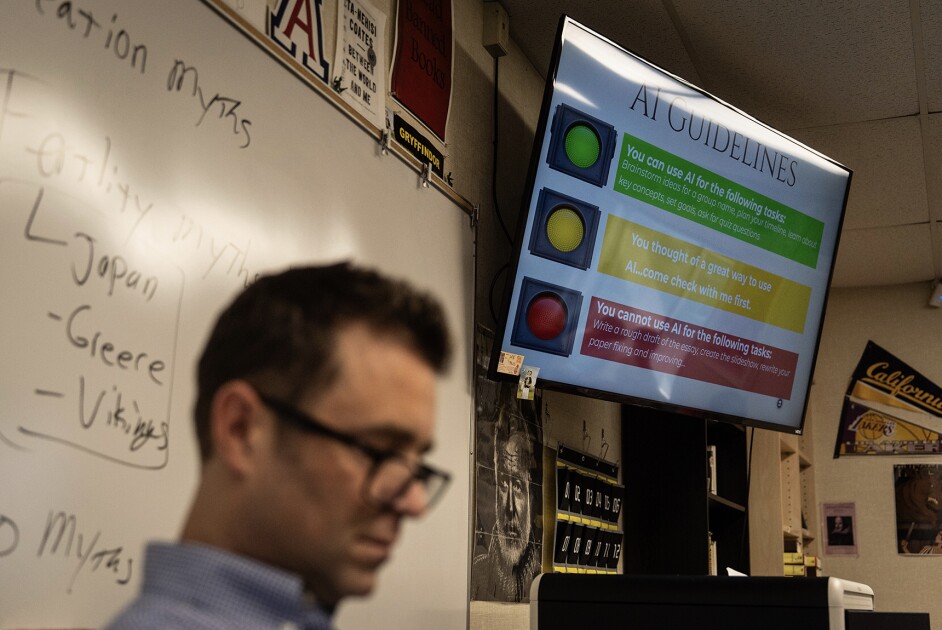
The integration of artificial intelligence in K-12 education is accelerating at an unprecedented rate, with a recent report by the Center for Democracy and Technology revealing that 85% of teachers and 86% of students are utilizing AI tools during the 2024-25 school year. While the technological advancement promises enhanced educational outcomes, it simultaneously poses significant challenges to the traditional educational framework.
Impact on Student-Teacher Relationships
One of the primary concerns arising from the widespread use of AI in classrooms is its potential to undermine student-teacher relationships. The reliance on AI tools for instruction and assessment may inadvertently reduce the personal interaction between educators and students, which is crucial for developing trust and understanding. The report warns that this shift could lead to a depersonalized learning environment, where students might feel alienated from their educators.
Critical Thinking Skills at Risk
Another pressing issue is the potential erosion of students' critical thinking skills. AI tools, while efficient in delivering information and automating tasks, may inadvertently encourage rote learning. Students might become overly dependent on AI for answers, thereby diminishing their ability to analyze and solve problems independently. This dependency could have long-term implications on students' cognitive development and their preparedness for real-world challenges.
Training and Professional Development
Despite the widespread adoption of AI technologies, the report highlights a concerning gap in training for both teachers and students. Less than half of the educators and learners have received adequate training on how to effectively and ethically use AI tools. This lack of preparedness underscores the urgent need for comprehensive professional development programs and AI literacy lessons aimed at equipping stakeholders with the necessary skills and knowledge to navigate the digital landscape.
"As AI becomes an integral part of the educational ecosystem, it is imperative that we prioritize training and ethical guidelines to ensure that these tools enhance rather than hinder the learning experience," said an expert from the Center for Democracy and Technology.
Conclusion
The rapid integration of AI in education presents a paradox of potential benefits and significant risks. While AI has the capacity to revolutionize learning, it is crucial to address the accompanying ethical and practical challenges. By investing in training and fostering an environment of critical engagement with technology, educators can harness the full potential of AI while safeguarding the integrity of the educational experience.
Originally published at https://www.edweek.org/technology/rising-use-of-ai-in-schools-comes-with-big-downsides-for-students/2025/10
ResearchWize Editorial Insight
The article "AI in Schools: A Double-Edged Sword" is crucial for students and researchers because it highlights the transformative yet challenging role of AI in education. With 85% of teachers and 86% of students using AI tools, the landscape of K-12 education is rapidly evolving. The article raises critical concerns about the erosion of student-teacher relationships and the potential decline in students' critical thinking skills due to over-reliance on AI.
For researchers, this presents a fertile ground for studying the long-term impacts of AI on educational outcomes and cognitive development. The lack of adequate training for both teachers and students underscores a systemic risk that could widen the gap between technology's potential and its actual benefits. This calls for urgent research into effective training programs and ethical guidelines.
Students, on the other hand, are at the frontline of this technological shift. Understanding the implications of AI on their learning processes and future job readiness is essential. How will AI reshape educational norms and what safeguards are necessary to prevent a depersonalized learning environment?
The article serves as a wake-up call to critically assess how AI is integrated into education and to ensure it enhances rather than hinders the learning experience. What policies can be implemented to balance AI's benefits with its risks? This is a pivotal question for policymakers and educators alike.
Looking Ahead
1. AI Literacy as a Core Curriculum Element
2. Dynamic Curriculum Development
Will traditional curriculum development keep pace with AI's rapid evolution? The answer hinges on our willingness to embrace adaptive learning models. Curricula must be dynamic, capable of evolving alongside technological advancements. This requires a paradigm shift in how educational materials are developed, moving from static textbooks to interactive, AI-driven platforms that are continuously updated.
3. Teacher Training Overhaul
The current gap in teacher training is not just a shortfall; it's a crisis in the making. Professional development programs need a complete overhaul to focus on AI-specific competencies, including ethical considerations and the fostering of critical thinking skills. Teachers must be empowered to guide students through the complexities of AI, transforming them from passive consumers to active skeptics and innovators.
4. Ethical Frameworks and Policies
As AI becomes entrenched in education, robust ethical frameworks and policies are non-negotiable. What happens if regulators fall behind? The absence of clear guidelines could lead to misuse or over-reliance on AI, exacerbating existing educational disparities. Policymakers must act swiftly to establish standards that protect student privacy and ensure equitable access to AI resources.
5. AI as a Tool for Personalized Learning
Imagine a world where AI not only assists but truly personalizes learning. AI has the potential to tailor educational experiences to individual student needs, identifying strengths and weaknesses with unprecedented precision. However, achieving this vision requires significant investment in AI systems designed with inclusivity and accessibility at their core.
6. Balancing Automation with Human Connection
The path forward is fraught with challenges, but it is also ripe with opportunity. The question is not whether AI will reshape education, but how we will rise to meet the demands of this new educational era. Are schools, educators, and policymakers ready to lead the charge, or will they be left scrambling to catch up?
Originally reported by https://www.edweek.org/technology/rising-use-of-ai-in-schools-comes-with-big-downsides-for-students/2025/10.
Related Articles
- 21 Indispensable AI Tools for Real Estate Agents
- Artificial intelligence in medical education: Potential and pitfalls
- AI is changing how students learn — or avoid learning
📌 Take the Next Step with ResearchWize
Want to supercharge your studying with AI? Install the ResearchWize browser extension today and unlock powerful tools for summaries, citations, and research organization.
Not sure yet? Learn more about how ResearchWize helps students succeed.