
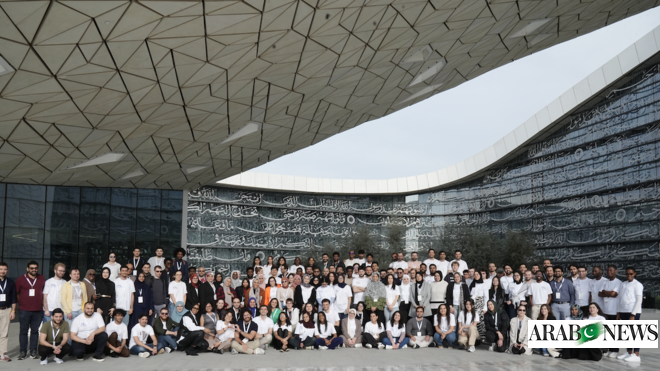
The Middle East and North Africa (MENA) region is set to witness a significant boost in artificial intelligence education with the upcoming second edition of the Machine Learning Winter School. This event, scheduled to take place in Saudi Arabia, is a collaborative effort with the King Abdullah University of Science and Technology (KAUST), aiming to nurture AI talent and spark innovation across the region.
Fostering AI Talent in MENA
The Machine Learning Winter School is part of a broader initiative to position the MENA region as a hub for technological advancement and AI expertise. By partnering with KAUST, which is renowned for its cutting-edge research and development, the program seeks to equip participants with the necessary skills to navigate and contribute to the rapidly evolving AI landscape.
AI education is crucial for the region's future economic and technological development. As industries increasingly rely on machine learning and AI technologies, the demand for skilled professionals in these fields is surging. The Winter School provides a platform for aspiring AI experts to learn from leading researchers and practitioners, thereby enhancing the region's competitiveness on the global stage.
"The collaboration with KAUST is a strategic move to ensure that the MENA region not only keeps pace with global AI advancements but also contributes significantly to the field," said a spokesperson for the Machine Learning Winter School.
ResearchWize Editorial Insight
The article highlights two pivotal developments: the rise of AI education in the MENA region and the historical significance of journalism in France. For students and researchers, this dual focus offers critical insights.
First, the Machine Learning Winter School in Saudi Arabia underscores the growing emphasis on AI education. As AI technologies permeate various industries, understanding this trend is vital for those aiming to stay relevant in the job market. The collaboration with KAUST suggests a strategic push to foster local talent, potentially transforming the region into a tech hub. Researchers should question how this initiative might influence global AI dynamics and regional economic shifts.
On the other hand, Le Figaro's 200th anniversary highlights the enduring legacy of traditional journalism. In an age dominated by digital media, the exhibition serves as a reminder of journalism's role in shaping public opinion and preserving culture. This raises questions about the future of journalism: How can traditional media adapt to technological advancements while maintaining integrity and credibility?
Both narratives stress the importance of balancing innovation with tradition. Students and researchers should consider how these lessons can be applied across disciplines, ensuring that technological progress does not overshadow cultural and ethical foundations. What long-term impacts will these developments have on education, media, and society at large?
Looking Ahead
1. Curriculum Overhaul or Stagnation?
AI education is screaming for a curriculum overhaul. The pace of AI development is relentless. Will educational institutions rise to the occasion, or will they lag behind, leaving students ill-prepared for the real world? Traditional subjects might need to take a back seat as we prioritize coding, data ethics, and machine learning. If schools and universities don't adapt, we risk creating a generation of graduates who are obsolete upon entering the workforce.
2. Regulation: The Double-Edged Sword
As AI education expands, so does the potential for misuse. What happens if regulators fall behind? We need robust policies to ensure that AI is used ethically and responsibly. Governments and educational bodies must work hand-in-hand to draft regulations that are not just reactive but proactive. If we fail here, we could face a future where AI exacerbates inequality and biases rather than solving them.
3. Teachers: The Unseen Challenge
Who will teach the teachers? AI education demands a new breed of educators who are not only tech-savvy but also adept at navigating the ethical minefield of AI. This is a call to arms for educational institutions to invest in teacher training. Without it, the gap between AI's potential and its ethical implementation will only widen.
4. Global Collaboration: A Necessity, Not a Luxury
The MENA region's initiative, exemplified by the Machine Learning Winter School, is a commendable step. But is it enough? AI transcends borders, and so should our educational efforts. International collaborations can accelerate knowledge transfer, but they require a commitment to shared goals and resources. Are we ready to prioritize global over national interests in AI education?
5. The Ethical Dilemma: Who Decides?
Teaching AI is not merely about coding and algorithms. It's about instilling a sense of responsibility. But who decides what is ethical? There’s a pressing need for a global consensus on AI ethics. Without it, we risk teaching a fractured, inconsistent moral compass that varies wildly from one region to another.
6. The Role of Private Sector: Friend or Foe?
Private tech giants are already stepping into the educational arena. Is this a boon or a bane? While they bring resources and expertise, there's a risk of education being swayed by corporate interests. Policymakers must ensure that partnerships with the private sector prioritize educational integrity over profit.
In conclusion, the future of AI education is fraught with challenges and opportunities. It's a tightrope walk between innovation and ethics, regulation and freedom, local and global perspectives. The decisions we make today will shape the AI leaders of tomorrow. Are we up to the task?
Originally reported by https://www.arabnews.pk/node/2629572/media.
Related Articles
- Rising Use of AI in Schools Comes With Big Downsides for Students
- How generative AI is really changing education – by outsourcing the production of knowledge to big tech
- I’m a Professor. A.I. Has Changed My Classroom, but Not for the Worse.
📌 Take the Next Step with ResearchWize
Want to supercharge your studying with AI? Install the ResearchWize browser extension today and unlock powerful tools for summaries, citations, and research organization.
Not sure yet? Learn more about how ResearchWize helps students succeed.