
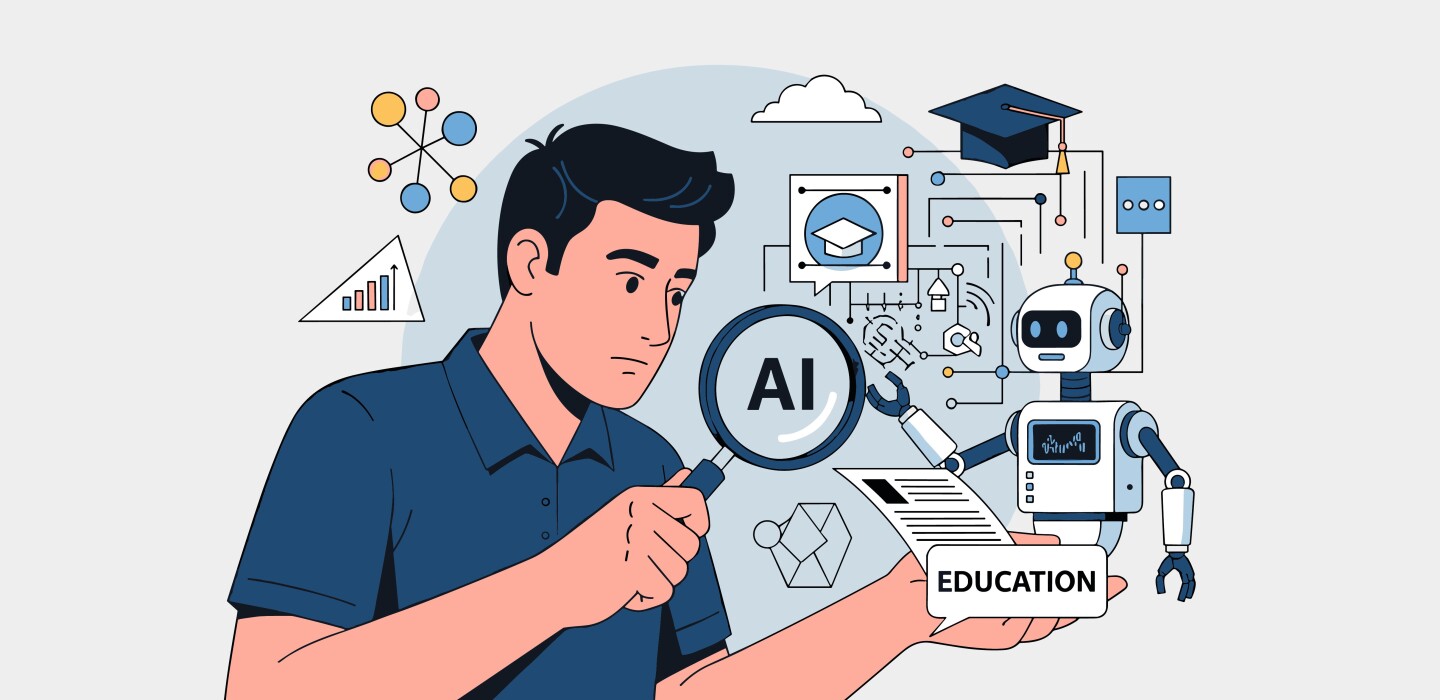
As the digital transformation in education accelerates, the integration of artificial intelligence (AI) tools into classrooms has become a focal point of discussion. EdTech Week, a recent event dedicated to educational technology, explored the ways in which AI can be harnessed to enhance teaching and learning experiences. However, the discussions also underscored the need for careful implementation to avoid potential pitfalls.
Personalizing Learning Experiences
One of the primary advantages of AI in education is its ability to tailor learning experiences to individual student needs. By analyzing data on student performance and learning styles, AI tools can offer personalized educational pathways, potentially leading to improved outcomes. This capability was a major point of emphasis during EdTech Week, where experts highlighted the transformative potential of AI when used thoughtfully in educational settings.
"AI has the power to revolutionize the way we approach teaching by providing customized learning experiences that cater to each student's unique needs," said Dr. Emily Carter, an education technology researcher. "However, this requires careful planning and execution to ensure that these tools are used effectively and ethically."
Challenges and Ethical Considerations
While the benefits of AI in education are promising, they are not without challenges. One significant concern is the issue of data privacy and security. As AI systems rely heavily on data to function, schools must ensure that student information is protected and used responsibly. Additionally, there are questions about the potential for AI to inadvertently reinforce existing biases in educational content and assessment.
Furthermore, the integration of AI tools into the classroom raises important questions about the role of educators. As AI takes on more administrative and instructional tasks, there is a risk of diminishing the critical human element in teaching. Educators must be equipped with the skills and knowledge to effectively integrate AI into their teaching practices, ensuring that technology enhances rather than replaces traditional educational methods.
Moving Forward
To harness the full potential of AI in education, stakeholders must collaborate to develop clear guidelines and best practices for implementation. This includes addressing ethical considerations, ensuring data privacy, and providing educators with the necessary training and resources. By approaching AI integration with a balanced perspective, the educational sector can leverage these tools to create more engaging and effective learning environments.
Originally published at https://www.govtech.com/education/k-12/edtech-week-how-to-make-ai-tools-useful-for-educators
ResearchWize Editorial Insight
The article sheds light on the growing role of AI in education, a topic of significant relevance for students and researchers. It underscores AI's potential to personalize learning, which could revolutionize educational outcomes by catering to individual student needs. This personalization is crucial for researchers exploring adaptive learning technologies and their impact on student performance.
However, the article also highlights critical challenges, such as data privacy and the risk of reinforcing biases. These issues are essential for researchers focused on educational equity and ethics in technology. The potential shift in educators' roles due to AI's integration raises questions about the future of teaching, a concern for those studying educational policy and workforce development.
The piece calls for collaborative efforts to establish guidelines for AI use in education, emphasizing the need for ethical considerations and educator training. This is a call to action for researchers to contribute to policy frameworks that ensure AI tools enhance rather than undermine traditional education methods.
In a broader context, the article prompts us to ask: How can we balance technological innovation with ethical responsibility in education? What long-term impacts will AI have on educational equity and the teaching profession? These are pressing questions for students and researchers committed to shaping the future of education.
Looking Ahead
1. Regulatory Lag & Ethical Dilemmas AI in education is not a distant future; it's here, and it's rapidly evolving. But what happens if regulators fall behind? We risk a 'Wild West' of AI applications, where ethical considerations and data privacy are trampled underfoot by rapid technological advancement. Legislators must step up. Clear, enforceable guidelines are crucial to ensure that AI tools are used responsibly and ethically in educational settings.
2. Curriculum Overhaul or Obsolescence? Will curriculum adapt fast enough to prepare students for an AI-driven world? The current pace of change demands a radical reevaluation of what we teach. Coding and data literacy must become as fundamental as math and reading. If educators continue to lag, we risk producing a generation ill-equipped for the future job market.
3. Empowering Educators, Not Replacing Them AI should augment, not replace, the human touch in teaching. Educators need robust training programs to effectively blend AI tools with traditional teaching methods. Without this, we risk dehumanizing education and diminishing the role of teachers to mere facilitators of technology.
4. Equity and Access: A New Digital Divide AI in education could widen the gap between the haves and have-nots. Schools with resources will implement AI-driven personalized learning, while underfunded schools may fall further behind. Policymakers must ensure equitable access to AI technology across all educational institutions to prevent deepening systemic inequalities.
5. A Call to Innovate Responsibly Innovation without responsibility is reckless. The educational sector must prioritize ethical AI development, focusing on transparency, accountability, and inclusivity. Stakeholders must collaborate to create a future where AI enhances learning for all students, not just a privileged few.
Originally reported by https://www.govtech.com/education/k-12/edtech-week-how-to-make-ai-tools-useful-for-educators.
Related Articles
- Binghamton University Projects for New Undergraduate Researchers
- Student engagement with AI tools in learning: evidence from a large-scale Estonian survey
- MenaML hosts 2026 Winter School in Saudi Arabia to boost AI education, collaboration in region
📌 Take the Next Step with ResearchWize
Want to supercharge your studying with AI? Install the ResearchWize browser extension today and unlock powerful tools for summaries, citations, and research organization.
Not sure yet? Learn more about how ResearchWize helps students succeed.